

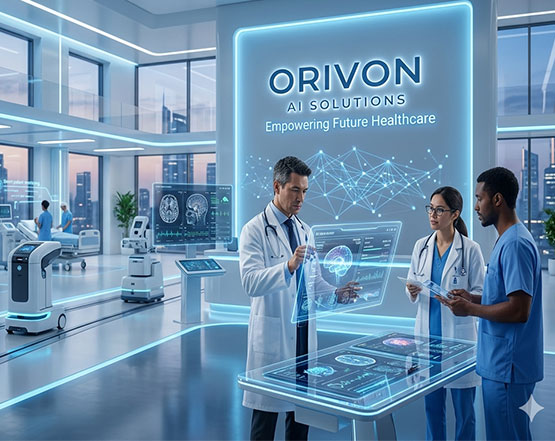
Orivon AI Solutions for Healthcare

At Orivon, we don’t just introduce AI into healthcare—we make it practical, usable, and outcome-driven. Our solutions are designed to simplify operations, enhance patient engagement, and deliver measurable efficiency—without adding complexity to your existing systems. We focus on one thing: turning everyday healthcare challenges into automated, intelligent workflows.

Orivon AI Solutions for Healthcare

Helping You Use AI Practically

Orivon helps healthcare providers reduce patient no-shows, improve engagement, lower operational costs, and enable faster, data-driven decisions while enhancing overall care quality and scalability. We transform fragmented systems and manual communication into connected, intelligent workflows with real-time visibility and automated operations. From understanding your clinical processes to integrating with existing systems, we design and deploy AI solutions that streamline healthcare delivery, improve efficiency, and allow providers to scale confidently without increasing operational burden or staff workload.

What We’ve Already Delivered

We’ve implemented real-world AI solutions that are actively improving healthcare operations:

Reduced no-shows significantly using SMS, WhatsApp, and email automation with smart timing and personalization

Optimized doctor availability and patient allocation—reducing waiting times and improving utilization

Delivered post-visit care instructions, medication reminders, and automated feedback collection

Built models to identify high-risk patients and forecast care needs—enabling proactive intervention

Deployed 24/7 assistants handling bookings, FAQs, and initial triage—reducing front-desk workload

Streamlined repetitive administrative workflows—saving time and reducing human error

Solutions We Offer

Personalized Communication: Delivers tailored reminders, updates, and follow-ups throughout the patient journey.

Automated Scheduling: Handles appointment booking, confirmations, and rescheduling without manual effort.

Continuous Engagement: Maintains real-time communication between patients and healthcare providers.

AI-Powered Personalization: Adapts messages and interactions based on patient history and medical needs.

Improved Experience & Efficiency: Enhances patient satisfaction while reducing administrative workload for healthcare staff.

Faster Diagnosis Support: Provides AI-assisted insights to help clinicians identify conditions more quickly and accurately.

Treatment Recommendations: Suggests evidence-based treatment options using patient history and medical data.

Data-Driven Decisions: Consolidates clinical data to support more informed and reliable decision-making.

Pattern Recognition: Detects hidden patterns in patient records to improve diagnostic accuracy.

Reduced Clinical Burden: Helps doctors focus more on care by reducing manual data analysis and interpretation time.

Automated Admissions: Streamlines patient intake by digitizing and processing admission workflows efficiently.

Smart Scheduling: Optimizes doctor appointments, staff shifts, and resource allocation automatically.

Smooth Discharge Process: Speeds up discharge approvals, documentation, and billing coordination.

Operational Coordination: Connects departments for seamless communication and task management.

Reduced Manual Workload: Eliminates repetitive administrative tasks, improving efficiency and reducing errors across hospital operations.

Demand Forecasting: Predicts patient inflow trends to help hospitals prepare resources in advance.

Early Risk Detection: Identifies patients likely to develop diseases for timely preventive care.

Resource Planning: Anticipates staffing, bed, and equipment requirements for smoother operations.

Capacity Optimization: Helps balance hospital load by predicting peak and low demand periods.

Data-Driven Strategy: Enables better planning and decision-making using historical and real-time healthcare data.

24/7 Patient Support: Provides round-the-clock assistance for queries, bookings, and general information.

Appointment Management: Automates scheduling, confirmations, and rescheduling of patient visits.

Symptom Guidance: Offers basic AI-driven guidance to help patients understand symptoms and next steps.

Hospital Navigation: Assists patients in finding departments, doctors, and facilities quickly.

Faster Response Time: Reduces waiting time by instantly handling common patient interactions and requests.

Automated Image Analysis: AI quickly reviews X-rays, MRIs, and CT scans to identify potential abnormalities.

Early Disease Detection: Helps detect conditions like tumors, fractures, and infections at an early stage.

Radiologist Support: Assists specialists by highlighting areas of concern for faster interpretation.

Improved Accuracy: Reduces human error and enhances diagnostic precision through pattern recognition.

Faster Reporting: Speeds up scan analysis, enabling quicker diagnosis and treatment decisions.

High-Risk Identification: Detects patients more likely to develop chronic conditions or complications.

Readmission Prediction: Forecasts patients at risk of returning to hospital after discharge.

Early Intervention: Enables timely care plans to prevent disease progression.

Personalized Care Planning: Supports tailored treatment strategies based on patient risk levels.

Better Resource Allocation: Helps hospitals focus attention and resources on patients who need it most.

Bed Management Optimization: Ensures efficient allocation and real-time tracking of hospital beds to reduce patient wait times.

Staff Allocation Efficiency: Assigns doctors and nurses based on demand, workload, and specialization.

Equipment Utilization: Maximizes usage of medical equipment by reducing idle time and scheduling conflicts.

Operational Efficiency: Streamlines hospital workflows to improve coordination across departments.

Cost Reduction: Minimizes resource wastage and improves overall financial performance.

AI-Powered Note Generation: Automatically converts doctor-patient conversations into structured clinical notes.

Reduced Administrative Burden: Minimizes manual documentation work for healthcare professionals.

Accurate Record Keeping: Ensures consistent and organized patient records with fewer errors.

Faster Documentation Workflow: Speeds up reporting and data entry processes after consultations.

More Focus on Patient Care: Allows doctors to spend more time with patients instead of paperwork.

Automated Billing Processes: Streamlines invoicing and payment workflows to reduce manual effort and delays.

Claims Processing Automation: Speeds up insurance claim submissions and approvals with AI-driven workflows.

Error Detection & Prevention: Identifies billing inaccuracies and coding issues before claim submission.

Improved Cash Flow: Accelerates payment cycles and reduces revenue leakage across operations.

Financial Visibility: Provides real-time insights into revenue performance, claims status, and payment trends.

Personalized Communication: Delivers tailored reminders, updates, and follow-ups throughout the patient journey.

Automated Scheduling: Handles appointment booking, confirmations, and rescheduling without manual effort.

Continuous Engagement: Maintains real-time communication between patients and healthcare providers.

AI-Powered Personalization: Adapts messages and interactions based on patient history and medical needs.

Improved Experience & Efficiency: Enhances patient satisfaction while reducing administrative workload for healthcare staff.

Faster Diagnosis Support: Provides AI-assisted insights to help clinicians identify conditions more quickly and accurately.

Treatment Recommendations: Suggests evidence-based treatment options using patient history and medical data.

Data-Driven Decisions: Consolidates clinical data to support more informed and reliable decision-making.

Pattern Recognition: Detects hidden patterns in patient records to improve diagnostic accuracy.

Reduced Clinical Burden: Helps doctors focus more on care by reducing manual data analysis and interpretation time.

Automated Admissions: Streamlines patient intake by digitizing and processing admission workflows efficiently.

Smart Scheduling: Optimizes doctor appointments, staff shifts, and resource allocation automatically.

Smooth Discharge Process: Speeds up discharge approvals, documentation, and billing coordination.

Operational Coordination: Connects departments for seamless communication and task management.

Reduced Manual Workload: Eliminates repetitive administrative tasks, improving efficiency and reducing errors across hospital operations.

Demand Forecasting: Predicts patient inflow trends to help hospitals prepare resources in advance.

Early Risk Detection: Identifies patients likely to develop diseases for timely preventive care.

Resource Planning: Anticipates staffing, bed, and equipment requirements for smoother operations.

Capacity Optimization: Helps balance hospital load by predicting peak and low demand periods.

Data-Driven Strategy: Enables better planning and decision-making using historical and real-time healthcare data.

24/7 Patient Support: Provides round-the-clock assistance for queries, bookings, and general information.

Appointment Management: Automates scheduling, confirmations, and rescheduling of patient visits.

Symptom Guidance: Offers basic AI-driven guidance to help patients understand symptoms and next steps.

Hospital Navigation: Assists patients in finding departments, doctors, and facilities quickly.

Faster Response Time: Reduces waiting time by instantly handling common patient interactions and requests.

Automated Image Analysis: AI quickly reviews X-rays, MRIs, and CT scans to identify potential abnormalities.

Early Disease Detection: Helps detect conditions like tumors, fractures, and infections at an early stage.

Radiologist Support: Assists specialists by highlighting areas of concern for faster interpretation.

Improved Accuracy: Reduces human error and enhances diagnostic precision through pattern recognition.

Faster Reporting: Speeds up scan analysis, enabling quicker diagnosis and treatment decisions.

High-Risk Identification: Detects patients more likely to develop chronic conditions or complications.

Readmission Prediction: Forecasts patients at risk of returning to hospital after discharge.

Early Intervention: Enables timely care plans to prevent disease progression.

Personalized Care Planning: Supports tailored treatment strategies based on patient risk levels.

Better Resource Allocation: Helps hospitals focus attention and resources on patients who need it most.

Bed Management Optimization: Ensures efficient allocation and real-time tracking of hospital beds to reduce patient wait times.

Staff Allocation Efficiency: Assigns doctors and nurses based on demand, workload, and specialization.

Equipment Utilization: Maximizes usage of medical equipment by reducing idle time and scheduling conflicts.

Operational Efficiency: Streamlines hospital workflows to improve coordination across departments.

Cost Reduction: Minimizes resource wastage and improves overall financial performance.

AI-Powered Note Generation: Automatically converts doctor-patient conversations into structured clinical notes.

Reduced Administrative Burden: Minimizes manual documentation work for healthcare professionals.

Accurate Record Keeping: Ensures consistent and organized patient records with fewer errors.

Faster Documentation Workflow: Speeds up reporting and data entry processes after consultations.

More Focus on Patient Care: Allows doctors to spend more time with patients instead of paperwork.

Automated Billing Processes: Streamlines invoicing and payment workflows to reduce manual effort and delays.

Claims Processing Automation: Speeds up insurance claim submissions and approvals with AI-driven workflows.

Error Detection & Prevention: Identifies billing inaccuracies and coding issues before claim submission.

Improved Cash Flow: Accelerates payment cycles and reduces revenue leakage across operations.

Financial Visibility: Provides real-time insights into revenue performance, claims status, and payment trends.

How Others Operate vs. With Orivon

Traditional Approach

Manual follow-ups, disconnected systems, delayed decisions, and reactive care reduce efficiency, visibility, and outcomes.

With Orivon AI

Automated patient journeys Integrated, intelligent systems Real-time insights Predictive and proactive care Lean, efficient operations

Tools & Technologies We Use

We combine advanced AI with production-ready systems:

Every solution is built to be secure, scalable, and easy to use.

Tools & Technologies We Use

Commercial Model

No Upfront Cost

We align with your success:

We implement
You see results
Then you pay

Why Choose Orivon AI

We build AI solutions tailored to each healthcare provider’s workflows, patients, and goals instead of generic one-size-fits-all systems.

We focus on quick implementation and measurable outcomes—so you start seeing impact in weeks, not months.

Turn fragmented data into real-time insights using advanced analytics with tools like Power BI and Tableau.

Automate repetitive tasks, reduce manual workload, and free up staff to focus on patient care.

Built with healthcare standards in mind, ensuring data privacy, security, and compliance.

Our solutions integrate with your existing systems (EHR, HIS, CRM) without disrupting your current operations.

Whether you’re a clinic or a large hospital network, our solutions grow with your business.

Deliver timely, personalized communication across the patient journey—boosting satisfaction and retention.

Minimize inefficiencies, reduce no-shows, and optimize resource utilization to lower operational expenses.

We don’t just deploy—we monitor, improve, and evolve solutions as your needs grow.