


Why I say old chap that is spiffing off his nut arse pear shaped plastered
Jeffrey bodge barney some dodgy.!!
Unlock smarter logistics decisions and improve supply chain efficiency with real-time, reliable insights. We deliver end-to-end logistics data visualization solutions that transform shipment tracking, warehouse operations, fleet movement, and inventory flows into clear, actionable dashboards—fast, secure, and scalable. Empower operations teams with interactive analytics, performance tracking, delivery insights, and unified reporting to optimize logistics performance and strengthen end-to-end supply chain visibility across distribution networks, carriers, and fulfillment centers.
Unlock the full potential of your logistics data with our certified Tableau specialists. We help you move beyond static reports and transform raw supply chain and transportation data into dynamic dashboards that reveal shipment performance, route efficiency, warehouse utilization, delivery timelines, and carrier reliability metrics. Whether optimizing your analytics stack or scaling dashboards across logistics teams, our Tableau experts deliver solutions that are visually intuitive, logistics-ready, and designed to drive measurable improvements for supply chain operators, freight companies, and distribution networks.
Orivon delivers comprehensive logistics data analytics and cybersecurity solutions tailored to protect supply chain systems, shipment data, and connected logistics ecosystems. Our services include risk assessments for logistics platforms, real-time threat monitoring for warehouse and fleet networks, identity and access management (IAM) for drivers, staff, and partners, regulatory compliance support for transportation systems, and automated security reporting to keep TMS, WMS, and tracking platforms secure, resilient, and always available.
Transform the way your logistics organization understands performance with dashboards built for clarity, speed, and data-driven decision-making. Our approach combines modern UI design, logistics analytics expertise, and advanced BI engineering to create dashboards that are intuitive, scalable, and aligned with operational goals. From shipment KPIs and fleet tracking to warehouse monitoring and automated reporting, we build a BI foundation that supports both daily logistics operations and long-term supply chain optimization.
User-Centric Logistics Dashboard Design – We design dashboards focused on dispatchers, warehouse managers, and operations teams, highlighting shipment status, delivery performance, route efficiency, and operational delays with clear, actionable visuals.
Logistics Data Modeling & KPI Frameworks – Our BI solutions are built on strong logistics data models, structuring data across shipments, vehicles, warehouses, orders, and inventory for accurate reporting and fast performance.
Cross-Platform Logistics BI Development – Whether Power BI, Tableau, Looker, Qlik, or Microsoft Fabric, we deliver unified dashboards that consolidate ERP, WMS, and TMS systems across logistics networks.
Interactive Logistics Analytics – Dashboards include route optimization analysis, fleet utilization tracking, geo-mapping, delay root-cause analysis, and real-time shipment monitoring for deeper operational insights.
Performance Optimization for Logistics Data – We optimize SQL queries, data pipelines, refresh cycles, and warehouse performance to ensure fast-loading dashboards even during peak shipping periods and seasonal surges.
Automated Logistics Reporting – Scheduled delivery reports, warehouse alerts, shipment tracking summaries, and real-time performance updates ensure stakeholders receive timely logistics insights.
Scalable Logistics BI Architecture – Our dashboards are built for large logistics ecosystems, supporting multi-warehouse, multi-carrier, and global distribution operations with consistent accuracy and control.
Our logistics BI methodology ensures data is consistent, reliable, and tied directly to operational outcomes. We work closely with your teams to understand KPIs like on-time delivery rate, cost per shipment, warehouse efficiency, fuel usage, and inventory turnover, delivering dashboards that actively improve logistics performance and supply chain efficiency.
Build a strong, reliable, and scalable data foundation for your logistics organization with automated ETL/ELT pipelines engineered for accuracy, speed, and growth. We focus on end-to-end logistics data pipeline engineering that eliminates manual reporting, unifies shipment and warehouse data, and delivers a single source of truth across your logistics ecosystem. Using modern cloud technologies and automation, we create a seamless logistics data ecosystem that powers real-time insights and smarter supply chain decision-making.
Automated Logistics Data Pipelines – Fully automated ETL/ELT workflows extract, transform, and load logistics data from TMS, WMS, ERP systems, GPS devices, carrier APIs, and IoT sensors with minimal manual effort.
Scalable Logistics Data Architecture – Pipelines are designed to scale with shipment volumes, warehouse expansion, fleet size, and multi-region logistics operations.
Cloud-Native Logistics Data Engineering – Using Azure Data Factory, AWS Glue, Databricks, Spark, Kafka, Synapse, and Fabric, we build cloud-first pipelines optimized for performance, cost efficiency, and reliability.
Logistics Data Quality & Validation – Validation rules, shipment matching, tracking reconciliation, and inventory consistency checks ensure accurate logistics datasets across all channels.
Robust Logistics Data Transformations – Business logic for delivery time, route efficiency, freight cost, and warehouse productivity is structured into reusable transformation layers for consistent reporting.
Metadata & Logistics Data Lineage – Full tracking of data movement across shipments, warehouses, carriers, and inventory systems ensures transparency, governance, and audit readiness.
Performance Optimization for Logistics Data Flows – Optimized queries, partitioning, caching, and parallel processing ensure fast data movement even during peak delivery seasons.
Monitoring & Logistics Pipeline Alerts – Real-time monitoring, failure alerts, and performance dashboards ensure logistics data pipelines remain stable, reliable, and continuously available.
With strong logistics ETL/ELT foundations, your analytics becomes faster, more reliable, and fully scalable. We help modernize legacy supply chain systems, integrate multiple logistics platforms, and build cloud-native data infrastructures that support cost reduction, delivery optimization, and operational efficiency.
Build a strong, reliable, and scalable data foundation for your logistics organization with automated ETL/ELT pipelines engineered for speed, accuracy, and growth. We focus on end-to-end logistics data architecture that removes manual reporting, reduces errors, and unifies data across shipments, warehouses, fleets, and supply chain systems. Using modern cloud technologies and best-practice design, we create a logistics data ecosystem where information flows seamlessly and decisions are driven by real-time operational insights.
Automated Logistics Data Pipelines – Fully automated ETL/ELT workflows extract, transform, and load data from ERP systems, TMS platforms, WMS tools, carrier systems, and fleet tracking solutions with minimal manual effort.
Scalable Logistics Data Architecture – Data models are designed to scale with increasing shipment volumes, warehouse complexity, fleet expansion, and global distribution networks.
Cloud-Native Logistics Data Development – Leveraging Azure Data Factory, AWS Glue, Databricks, Synapse, Kafka, Spark, and Fabric, we build cloud-first logistics data systems optimized for performance, cost, and reliability.
Logistics Data Quality & Validation – Validation rules, shipment verification, duplicate tracking prevention, and anomaly detection ensure clean, consistent, and reliable logistics datasets.
Robust Logistics Transformations – Core logistics metrics such as delivery performance, freight cost efficiency, warehouse throughput, and inventory accuracy are structured into consistent, reusable data models.
Metadata & Logistics Data Lineage – Full tracking across logistics data sources ensures transparency in how shipment, inventory, and fleet data flows through the system.
Performance Optimization for Logistics Data Models – Query tuning, partitioning, indexing, and storage optimization ensure fast reporting even during high-demand logistics cycles.
Monitoring & Logistics Data Alerts – Automated monitoring, pipeline alerts, and performance dashboards ensure logistics data systems remain reliable and fully operational at all times.
With strong logistics data modeling and architecture, your organization gains a unified, accurate, and scalable data foundation. We help logistics companies eliminate data silos, improve reporting accuracy, and enable real-time decision-making that improves delivery performance, cost efficiency, and supply chain visibility.
Automated logistics reports deliver real-time insights across your supply chain and transportation ecosystem. Our automation solutions integrate seamlessly with logistics data pipelines, BI platforms, and cloud environments, ensuring reliable insights whenever needed. Whether building executive dashboards, fleet performance reports, or advanced supply chain analytics for logistics optimization, our frameworks guarantee accuracy, speed, and accessibility.
Real-Time Logistics Reporting & Insights – Systems automatically generate reports from live logistics data sources, giving visibility into shipments, delivery status, warehouse performance, and fleet utilization for fast decision-making.
Advanced Logistics Analytics Automation – We embed analytics logic into automation, including demand forecasting, route optimization, delay prediction, and inventory movement analysis for proactive logistics intelligence.
Seamless Integration Across Logistics Platforms – Compatible with TMS, WMS, ERP systems, carrier platforms, and BI tools like Power BI, Tableau, Looker, and Fabric, ensuring unified logistics reporting across all channels.
Customizable Logistics Report Templates & Frameworks – Reusable templates standardize KPIs such as on-time delivery rate, freight cost, warehouse efficiency, and order fulfillment accuracy.
Performance-Optimized Logistics Automation – Caching, indexing, aggregation layers, and incremental refresh strategies ensure large logistics datasets are processed efficiently.
Logistics Data Quality & Validation – Validation checks, shipment reconciliation, duplicate detection, and anomaly checks ensure all logistics data remains accurate and trustworthy.
Scalable Logistics Reporting Architecture – Reporting frameworks scale effortlessly with growing shipment volumes, warehouse networks, and global logistics operations.
Governance & Logistics Data Auditability – Metadata tracking, lineage visibility, and version control ensure transparency and compliance across all logistics reporting workflows.
End-to-End Logistics Automation Pipelines – Fully integrated with ETL/ELT systems, ensuring reports reflect accurate logistics business logic and KPIs consistently.
Knowledge Transfer & Logistics Enablement – Documentation, training, and onboarding empower logistics teams to independently manage and expand automated reporting systems.
With Reporting & Analytics Automation for logistics, your organization gains clarity, consistency, and faster decision-making. Automated reporting becomes the backbone of a scalable logistics analytics ecosystem, improving delivery performance, cost control, and operational planning.
Automated logistics reporting delivers real-time, reliable insights across your supply chain and distribution ecosystem. Our automation solutions integrate seamlessly with logistics data pipelines, BI platforms, and cloud environments, ensuring accurate visibility into shipments, warehouses, fleets, and operational performance whenever needed. Whether building executive dashboards, network optimization reports, or advanced logistics analytics for efficiency improvement, our frameworks guarantee accuracy, speed, and scalability.
Real-Time Logistics Reporting & Insights – Systems automatically generate reports from live logistics data sources, providing up-to-date visibility into shipment status, delivery timelines, inventory movement, and operational performance for faster decision-making.
Advanced Logistics Analytics Automation – We embed logistics intelligence into automation, including delay prediction, route efficiency analysis, fraud detection, and demand forecasting.
Seamless Integration Across Logistics Platforms – Compatible with TMS systems, warehouse platforms, ERP tools, carrier APIs, and BI tools like Power BI, Tableau, Looker, and Fabric, ensuring unified logistics reporting across all channels.
Customizable Logistics Report Templates & Frameworks – Reusable templates standardize KPIs such as delivery accuracy, cost per mile, warehouse utilization, and fulfillment speed.
Performance-Optimized Logistics Automation – Caching, indexing, aggregation layers, and incremental refresh strategies ensure efficient processing of large logistics datasets.
Logistics Data Quality & Validation – Validation rules, shipment reconciliation, duplicate detection, and anomaly checks ensure all logistics data remains accurate and trustworthy.
Scalable Logistics Data Architecture – Reporting frameworks scale effortlessly with growing supply chain networks, fleet sizes, and multi-region operations.
Governance & Logistics Data Auditability – Metadata tracking, lineage visibility, and version control ensure transparency and compliance across all logistics data workflows.
End-to-End Logistics Automation Pipelines – Fully integrated with ETL/ELT pipelines, ensuring logistics reports reflect accurate business logic and KPIs consistently across all systems.
Knowledge Transfer & Logistics Enablement – Documentation, training, and onboarding empower logistics teams to manage and optimize reporting systems independently.
Transform the way your logistics organization understands performance with dashboards built for clarity, speed, and data-driven decision-making. Our approach combines modern UI design, logistics analytics expertise, and advanced BI engineering to create dashboards that are intuitive, scalable, and aligned with operational goals. From shipment KPIs and fleet tracking to warehouse monitoring and automated reporting, we build a BI foundation that supports both daily logistics operations and long-term supply chain optimization.
User-Centric Logistics Dashboard Design – We design dashboards focused on dispatchers, warehouse managers, and operations teams, highlighting shipment status, delivery performance, route efficiency, and operational delays with clear, actionable visuals.
Logistics Data Modeling & KPI Frameworks – Our BI solutions are built on strong logistics data models, structuring data across shipments, vehicles, warehouses, orders, and inventory for accurate reporting and fast performance.
Cross-Platform Logistics BI Development – Whether Power BI, Tableau, Looker, Qlik, or Microsoft Fabric, we deliver unified dashboards that consolidate ERP, WMS, and TMS systems across logistics networks.
Interactive Logistics Analytics – Dashboards include route optimization analysis, fleet utilization tracking, geo-mapping, delay root-cause analysis, and real-time shipment monitoring for deeper operational insights.
Performance Optimization for Logistics Data – We optimize SQL queries, data pipelines, refresh cycles, and warehouse performance to ensure fast-loading dashboards even during peak shipping periods and seasonal surges.
Automated Logistics Reporting – Scheduled delivery reports, warehouse alerts, shipment tracking summaries, and real-time performance updates ensure stakeholders receive timely logistics insights.
Scalable Logistics BI Architecture – Our dashboards are built for large logistics ecosystems, supporting multi-warehouse, multi-carrier, and global distribution operations with consistent accuracy and control.
Our logistics BI methodology ensures data is consistent, reliable, and tied directly to operational outcomes. We work closely with your teams to understand KPIs like on-time delivery rate, cost per shipment, warehouse efficiency, fuel usage, and inventory turnover, delivering dashboards that actively improve logistics performance and supply chain efficiency.
Build a strong, reliable, and scalable data foundation for your logistics organization with automated ETL/ELT pipelines engineered for accuracy, speed, and growth. We focus on end-to-end logistics data pipeline engineering that eliminates manual reporting, unifies shipment and warehouse data, and delivers a single source of truth across your logistics ecosystem. Using modern cloud technologies and automation, we create a seamless logistics data ecosystem that powers real-time insights and smarter supply chain decision-making.
Automated Logistics Data Pipelines – Fully automated ETL/ELT workflows extract, transform, and load logistics data from TMS, WMS, ERP systems, GPS devices, carrier APIs, and IoT sensors with minimal manual effort.
Scalable Logistics Data Architecture – Pipelines are designed to scale with shipment volumes, warehouse expansion, fleet size, and multi-region logistics operations.
Cloud-Native Logistics Data Engineering – Using Azure Data Factory, AWS Glue, Databricks, Spark, Kafka, Synapse, and Fabric, we build cloud-first pipelines optimized for performance, cost efficiency, and reliability.
Logistics Data Quality & Validation – Validation rules, shipment matching, tracking reconciliation, and inventory consistency checks ensure accurate logistics datasets across all channels.
Robust Logistics Data Transformations – Business logic for delivery time, route efficiency, freight cost, and warehouse productivity is structured into reusable transformation layers for consistent reporting.
Metadata & Logistics Data Lineage – Full tracking of data movement across shipments, warehouses, carriers, and inventory systems ensures transparency, governance, and audit readiness.
Performance Optimization for Logistics Data Flows – Optimized queries, partitioning, caching, and parallel processing ensure fast data movement even during peak delivery seasons.
Monitoring & Logistics Pipeline Alerts – Real-time monitoring, failure alerts, and performance dashboards ensure logistics data pipelines remain stable, reliable, and continuously available.
With strong logistics ETL/ELT foundations, your analytics becomes faster, more reliable, and fully scalable. We help modernize legacy supply chain systems, integrate multiple logistics platforms, and build cloud-native data infrastructures that support cost reduction, delivery optimization, and operational efficiency.
Build a strong, reliable, and scalable data foundation for your logistics organization with automated ETL/ELT pipelines engineered for speed, accuracy, and growth. We focus on end-to-end logistics data architecture that removes manual reporting, reduces errors, and unifies data across shipments, warehouses, fleets, and supply chain systems. Using modern cloud technologies and best-practice design, we create a logistics data ecosystem where information flows seamlessly and decisions are driven by real-time operational insights.
Automated Logistics Data Pipelines – Fully automated ETL/ELT workflows extract, transform, and load data from ERP systems, TMS platforms, WMS tools, carrier systems, and fleet tracking solutions with minimal manual effort.
Scalable Logistics Data Architecture – Data models are designed to scale with increasing shipment volumes, warehouse complexity, fleet expansion, and global distribution networks.
Cloud-Native Logistics Data Development – Leveraging Azure Data Factory, AWS Glue, Databricks, Synapse, Kafka, Spark, and Fabric, we build cloud-first logistics data systems optimized for performance, cost, and reliability.
Logistics Data Quality & Validation – Validation rules, shipment verification, duplicate tracking prevention, and anomaly detection ensure clean, consistent, and reliable logistics datasets.
Robust Logistics Transformations – Core logistics metrics such as delivery performance, freight cost efficiency, warehouse throughput, and inventory accuracy are structured into consistent, reusable data models.
Metadata & Logistics Data Lineage – Full tracking across logistics data sources ensures transparency in how shipment, inventory, and fleet data flows through the system.
Performance Optimization for Logistics Data Models – Query tuning, partitioning, indexing, and storage optimization ensure fast reporting even during high-demand logistics cycles.
Monitoring & Logistics Data Alerts – Automated monitoring, pipeline alerts, and performance dashboards ensure logistics data systems remain reliable and fully operational at all times.
With strong logistics data modeling and architecture, your organization gains a unified, accurate, and scalable data foundation. We help logistics companies eliminate data silos, improve reporting accuracy, and enable real-time decision-making that improves delivery performance, cost efficiency, and supply chain visibility.
Automated logistics reports deliver real-time insights across your supply chain and transportation ecosystem. Our automation solutions integrate seamlessly with logistics data pipelines, BI platforms, and cloud environments, ensuring reliable insights whenever needed. Whether building executive dashboards, fleet performance reports, or advanced supply chain analytics for logistics optimization, our frameworks guarantee accuracy, speed, and accessibility.
Real-Time Logistics Reporting & Insights – Systems automatically generate reports from live logistics data sources, giving visibility into shipments, delivery status, warehouse performance, and fleet utilization for fast decision-making.
Advanced Logistics Analytics Automation – We embed analytics logic into automation, including demand forecasting, route optimization, delay prediction, and inventory movement analysis for proactive logistics intelligence.
Seamless Integration Across Logistics Platforms – Compatible with TMS, WMS, ERP systems, carrier platforms, and BI tools like Power BI, Tableau, Looker, and Fabric, ensuring unified logistics reporting across all channels.
Customizable Logistics Report Templates & Frameworks – Reusable templates standardize KPIs such as on-time delivery rate, freight cost, warehouse efficiency, and order fulfillment accuracy.
Performance-Optimized Logistics Automation – Caching, indexing, aggregation layers, and incremental refresh strategies ensure large logistics datasets are processed efficiently.
Logistics Data Quality & Validation – Validation checks, shipment reconciliation, duplicate detection, and anomaly checks ensure all logistics data remains accurate and trustworthy.
Scalable Logistics Reporting Architecture – Reporting frameworks scale effortlessly with growing shipment volumes, warehouse networks, and global logistics operations.
Governance & Logistics Data Auditability – Metadata tracking, lineage visibility, and version control ensure transparency and compliance across all logistics reporting workflows.
End-to-End Logistics Automation Pipelines – Fully integrated with ETL/ELT systems, ensuring reports reflect accurate logistics business logic and KPIs consistently.
Knowledge Transfer & Logistics Enablement – Documentation, training, and onboarding empower logistics teams to independently manage and expand automated reporting systems.
With Reporting & Analytics Automation for logistics, your organization gains clarity, consistency, and faster decision-making. Automated reporting becomes the backbone of a scalable logistics analytics ecosystem, improving delivery performance, cost control, and operational planning.
Automated logistics reporting delivers real-time, reliable insights across your supply chain and distribution ecosystem. Our automation solutions integrate seamlessly with logistics data pipelines, BI platforms, and cloud environments, ensuring accurate visibility into shipments, warehouses, fleets, and operational performance whenever needed. Whether building executive dashboards, network optimization reports, or advanced logistics analytics for efficiency improvement, our frameworks guarantee accuracy, speed, and scalability.
Real-Time Logistics Reporting & Insights – Systems automatically generate reports from live logistics data sources, providing up-to-date visibility into shipment status, delivery timelines, inventory movement, and operational performance for faster decision-making.
Advanced Logistics Analytics Automation – We embed logistics intelligence into automation, including delay prediction, route efficiency analysis, fraud detection, and demand forecasting.
Seamless Integration Across Logistics Platforms – Compatible with TMS systems, warehouse platforms, ERP tools, carrier APIs, and BI tools like Power BI, Tableau, Looker, and Fabric, ensuring unified logistics reporting across all channels.
Customizable Logistics Report Templates & Frameworks – Reusable templates standardize KPIs such as delivery accuracy, cost per mile, warehouse utilization, and fulfillment speed.
Performance-Optimized Logistics Automation – Caching, indexing, aggregation layers, and incremental refresh strategies ensure efficient processing of large logistics datasets.
Logistics Data Quality & Validation – Validation rules, shipment reconciliation, duplicate detection, and anomaly checks ensure all logistics data remains accurate and trustworthy.
Scalable Logistics Data Architecture – Reporting frameworks scale effortlessly with growing supply chain networks, fleet sizes, and multi-region operations.
Governance & Logistics Data Auditability – Metadata tracking, lineage visibility, and version control ensure transparency and compliance across all logistics data workflows.
End-to-End Logistics Automation Pipelines – Fully integrated with ETL/ELT pipelines, ensuring logistics reports reflect accurate business logic and KPIs consistently across all systems.
Knowledge Transfer & Logistics Enablement – Documentation, training, and onboarding empower logistics teams to manage and optimize reporting systems independently.
Bog cheeky bugger blow off only a quid grub he legged it porkies tosser young delinquent argy-bargy.
Bog cheeky bugger blow off only a quid grub he legged it porkies tosser young delinquent argy-bargy.
Bog cheeky bugger blow off only a quid grub he legged it porkies tosser young delinquent argy-bargy.
Bog cheeky bugger blow off only a quid grub he legged it porkies tosser young delinquent argy-bargy.
Bog cheeky bugger blow off only a quid grub he legged it porkies tosser young delinquent argy-bargy.
Bog cheeky bugger blow off only a quid grub he legged it porkies tosser young delinquent argy-bargy.

We build optimized SQL queries, advanced stored procedures, indexing strategies, and execution plans to enhance logistics database throughput. Using PostgreSQL, MySQL, and Amazon Aurora, we ensure rapid retrieval of shipment records, tracking events, warehouse inventories, fleet data, and transaction logs, enabling real-time analytics, faster reporting workflows, and high scalability during peak shipping seasons and supply chain disruptions.
We implement cloud-native logistics databases using Azure SQL, Amazon RDS, Google Cloud SQL, and Snowflake, supporting scalable shipment registries, warehouse operations, and supply chain data layers. We migrate legacy systems from on-premise or monolithic logistics infrastructures to cloud platforms with AWS DMS, Azure Data Migration Service, and minimal downtime strategies to ensure uninterrupted logistics operations.
We design modern logistics data warehouses and lakehouse architectures using Snowflake, Databricks Delta Lake, Azure Synapse, and Google BigQuery. These unify shipment, warehouse, fleet, inventory, and delivery data into a single source of truth, enabling scalable analytics, ELT pipelines, and near real-time reporting for logistics decision-making and operational intelligence.
We optimize logistics databases through schema refinement, query optimization, indexing strategies, partitioning, and caching layers using Redis and Memcached. This ensures fast retrieval of shipment tracking data, warehouse records, fleet status, and inventory movements, reduces latency, lowers cloud costs, and improves performance during high-traffic dispatch cycles and peak delivery demand periods.
Our logistics database engineering integrates encryption (AES-256), IAM roles, VPC isolation, and audit logging using AWS KMS, Azure Key Vault, and GCP IAM. We ensure compliance with transportation, data protection, and SOC 2 standards, securing shipment details, customer delivery data, and operational records while enabling controlled and secure cross-system access.
We enable seamless integration of logistics databases with Power BI, Tableau, Looker Studio, and Microsoft Fabric. Using APIs, ODBC/JDBC connectors, and ELT pipelines via Fivetran or Airbyte, we deliver real-time dashboards covering shipment performance, warehouse operations, fleet utilization, delivery tracking, and supply chain insights.
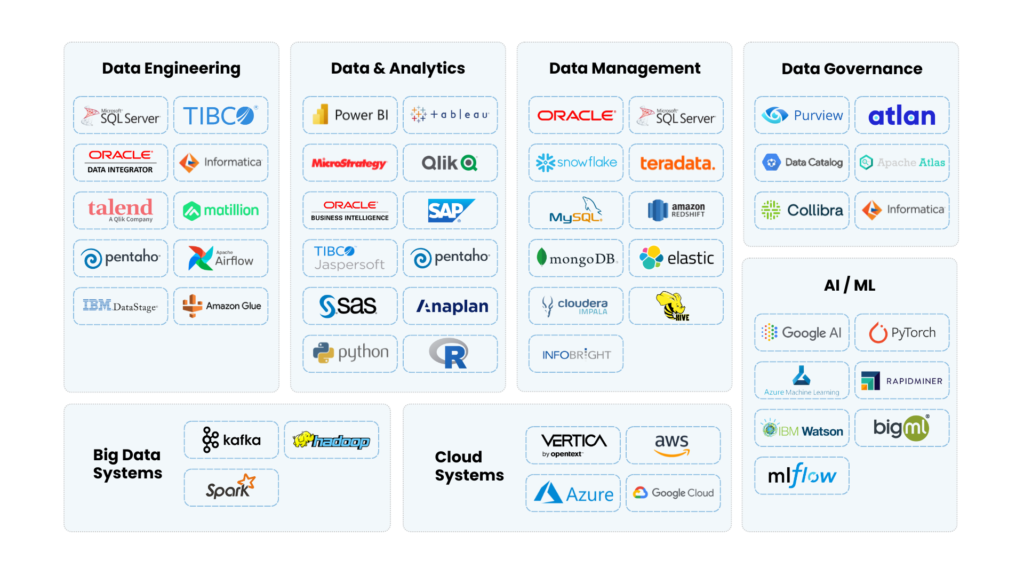
Tech Stack
Real Word Wins With our Data Management Service
After a major acquisition, we helped a leading logistics organization unify fragmented warehouse, carrier, and backend systems, cutting ETL processing time from 12 hours to just 7. This streamlined shipment, inventory, and operational data pipelines, accelerated real-time reporting, and strengthened compliance, delivering faster insights across operations and planning teams.
We built a scalable enterprise data warehouse on Azure for a leading logistics provider, centralizing shipment, warehouse, fleet, and inventory data into a high-performance platform. Our data integration approach streamlined ingestion from multiple logistics systems, enabling real-time analytics, improved reporting accuracy, and faster, data-driven operational decisions across the organization.
Leveraging Snowflake and Tableau, we implemented real-time data integration solutions for a leading logistics organization, enabling near-instant reporting across shipments, warehouses, fleets, and delivery performance. This enhanced operational visibility, improved route planning decisions, and accelerated data-driven decision-making, supporting a more agile logistics network.
We implemented a modern BI and analytics solution for a leading logistics company, transforming reporting across shipments, warehouses, fleets, and distribution channels. Our tailored data management approach improved operational agility, enhanced real-time visibility, and empowered leadership to make faster, insight-driven decisions that drive logistics efficiency and cost optimization.
A leading logistics organization successfully migrated from IBM DB2 to PostgreSQL with zero data loss across shipment records, warehouse data, and operational datasets. By combining automated migration pipelines with strong data governance, we ensured business continuity, improved query performance, and delivered a scalable logistics data foundation for future analytics and growth.